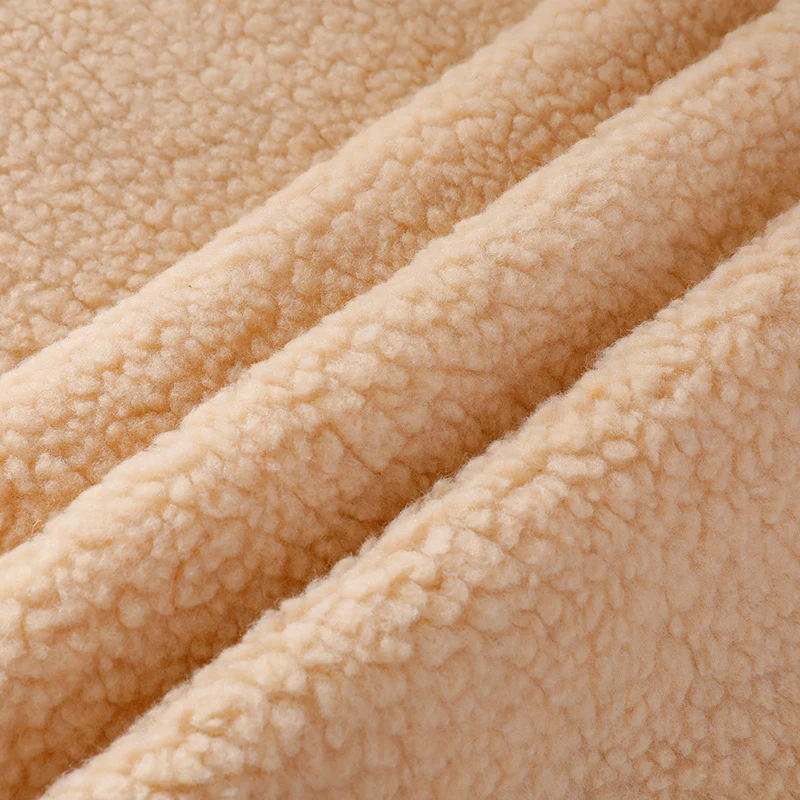
Understanding Lamb Wool Fleece Construction
Lamb wool fleece, often referred to in the industry as sherpa-style fabric, is characterized by its unique surface structure. Unlike flat or brushed fleece families such as coral fleece, this material features a looped or curled pile on one side, mimicking the appearance of natural sheep's wool. The base fabric is typically knitted from polyester yarns, which are then processed to create the signature curl. This construction traps air within the loops, providing excellent thermal insulation while maintaining a lightweight feel. The visible texture adds aesthetic value to finished goods, making it a popular choice for products where both function and style are important.
The density of the curls determines the loft and warmth of the final product. Our manufacturing process allows for control over the tightness of the curl and the height of the pile. Buyers can request specific variations depending on whether they need a dense, heavy fabric for winter coats or a lighter, more open structure for summer throws. The reverse side of the fabric is usually smooth or lightly brushed, allowing for comfortable contact against the skin or other layers.
Standard Specifications for Lamb Wool Plush
For buyers planning their production runs, understanding the standard physical properties of our lamb wool plush family is essential. We maintain consistent quality across our core specifications, though adjustments can be made based on project requirements. The following table outlines the typical ranges for this fabric family:
| Property | Specification Range |
|---|---|
| Composition | 100% Polyester |
| Weight (GSM) | 300-380 gsm |
| Width | 150-160 cm |
| Surface Type | Curly Sherpa-style Pile |
The weight range of 300 to 380 grams per square meter places this fabric in the medium-to-heavy category. This ensures durability and sufficient warmth retention for most cold-weather applications. The width of 150 to 160 centimeters is optimized for efficient cutting of large items like blankets and bedding sets, minimizing waste during the manufacturing process. While these are our standard offerings, we understand that specific end uses may require slight variations in weight or width. Therefore, we encourage buyers to discuss their precise needs with us early in the inquiry stage to ensure the fabric matches their technical requirements.
Primary End Uses and Applications
Lamb wool fleece is versatile due to its combination of warmth, texture, and durability. It is widely used in home textiles, apparel, and pet care products. In the home textile sector, it serves as an excellent material for throw blankets, bed runners, and cushion covers. The curly surface adds a cozy, inviting aesthetic to living spaces, while the polyester composition makes it easy to care for and resistant to shrinking. For bedding, it is often used as a lining for duvet covers or as a standalone blanket layer for added warmth without excessive bulk.
In apparel, this fabric is predominantly used for linings rather than outer shells. It lines jackets, vests, hats, and gloves, providing a soft, warm interior against the skin. The texture helps prevent slipping between layers, ensuring that garments stay in place during movement. Additionally, it is used in casual wear such as hoodies and sweatshirts where a rugged, outdoor look is desired. The durability of the polyester fibers ensures that the lining maintains its structure after repeated washing and use.
Pet products represent another significant market for lamb wool fleece. Pet beds, mats, and blankets benefit greatly from the fabric's insulating properties and chew-resistant nature compared to softer, looser piles. The curly texture is appealing to pets, providing comfort and warmth, while the sturdy construction withstands daily use. For manufacturers of pet beds and accessories, this fabric offers a balance of cost-effectiveness and performance that synthetic alternatives often lack.
How to Specify Your Requirements
To receive an accurate quote and sample, buyers should provide detailed specifications in their initial inquiry. Clear communication at the start prevents misunderstandings and ensures the fabric meets your production standards. When contacting GRC Textile, please include the following information:
- Fabric Family: Clearly state that you are interested in Lamb Wool Fleece (Sherpa-style).
- Weight: Indicate your target GSM within the 300-380 range, or specify if you need a custom weight outside this band.
- Width: Confirm if the standard 150-160 cm width is suitable or if a different cut is required.
- Color: Provide Pantone codes or reference samples for color matching.
- Finish: Describe any desired treatments, such as anti-pill brushing or bonding.
- End Use: Explain the final application (e.g., blanket, jacket lining, pet bed) to help us recommend the best pile density.
- Quantity: Estimate your annual volume or initial order size to help us assess feasibility.
Providing this level of detail allows our team to prepare relevant samples and offer realistic pricing structures. Since MOQ-friendly policies apply, even smaller trial orders can be accommodated, but exact minimum quantities are confirmed on a per-project basis.
Finishing and Print Options
Beyond the basic fabric structure, GRC Textile offers various finishing techniques to enhance functionality and aesthetics. Embossing can be applied to create patterns on the surface, adding brand identity or decorative elements without compromising the pile's integrity. Printing options allow for vibrant colors and complex designs, suitable for fashion-forward home textiles or branded merchandise.
For improved durability, anti-pill brushing can be requested to reduce surface fuzzing over time. Bonding is another critical service; we can laminate the lamb wool fleece to a backing fabric, such as woven polyester or non-woven materials, to increase stability and wind resistance. This is particularly useful for outerwear linings and automotive interiors. Flame-retardant treatments are available upon request and must be confirmed per order to ensure compliance with specific regional safety standards. These additional services transform the base fabric into a specialized component tailored to rigorous industrial or consumer demands.
If you are considering other plush families for comparison, you might explore our faux shearling options, which offer a similar aesthetic with different structural properties. Each fabric type has distinct advantages depending on the intended application and budget constraints.
Frequently asked questions
How do I choose the right weight and hand-feel for my project?
The choice depends on the intended use and desired warmth. A heavier weight near 380 gsm provides greater insulation and a denser, more luxurious hand-feel suitable for premium blankets or winter apparel linings. A lighter weight around 300 gsm offers better flexibility and breathability, ideal for everyday throws or children's sleepwear. We recommend requesting samples across the weight spectrum to evaluate the tactile difference before committing to production.
What print and embossing options are available for lamb wool fleece?
We support digital printing and screen printing for vibrant, multi-color designs that penetrate the pile without stiffening the fabric. Embossing creates permanent, textured patterns on the surface, which is excellent for branding or decorative effects on home textiles. Both methods preserve the softness of the polyester fibers, though complex prints may require longer setup times compared to solid dyed fabrics.
How durable is the pile, and what care instructions should I follow?
The polyester pile is highly durable and resistant to matting when properly constructed. To maintain the loft and prevent shedding, we advise machine washing in cold water on a gentle cycle and tumble drying on low heat. Avoid high heat settings, as they can melt the synthetic fibers and flatten the curls. Regular brushing with a soft-bristle brush can help restore the texture after several washes.
Ready to move forward? Send your detailed specification sheet to info@grctex.com or fill out the inquiry form at /contact. Our team will review your requirements and respond with sample availability and project-specific quotes.